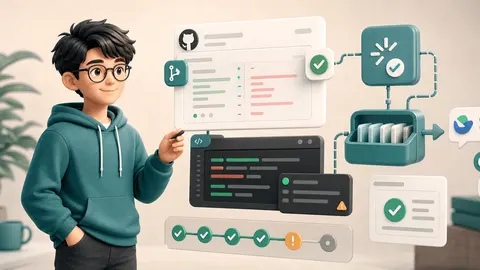
Turning Codex Review Into a Service
The hard part of AI code review is not asking a model to read a diff. It is turning trigger, execution, comments, approval, history, cost, and failure recovery into a controlled engineering workflow.
Page 2. Posts are ordered by date, with each page loading a bounded set of covers.
The hard part of AI code review is not asking a model to read a diff. It is turning trigger, execution, comments, approval, history, cost, and failure recovery into a controlled engineering workflow.

The thirteenth article in Thirty Years in IT and Me. In 2008, the App Store and the first Android phone pushed mobile phones from hardware products into software platforms. For someone still working in Linux and server systems, the real shift was not a smaller screen, but the migration of software distribution, user entry points, and developer ecosystems.
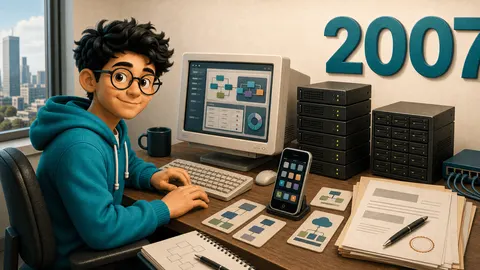
The twelfth article in Thirty Years in IT and Me. In 2007, the iPhone shifted the computing entry point, Android began taking shape, and VMware's IPO reminded the industry that both frontend entry points and backend infrastructure were changing. Around that year, I moved toward C++, GTK, and Linux cluster-management software.

The real heat in tech is no longer just another model release. AI coding agents are entering real development workflows: taking tasks, editing repositories, running tests, opening pull requests, and forcing old questions about context, safety, and review back onto the table.
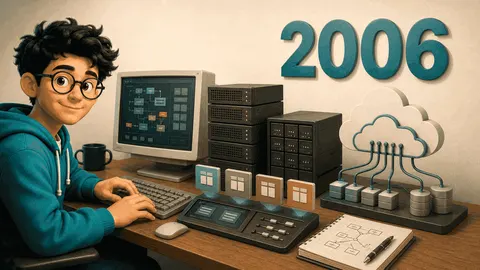
The eleventh article in Thirty Years in IT and Me. In 2006, S3, EC2, Hadoop, Twitter, jQuery, and open-sourced Java pushed the internet into a new infrastructure stage. Servers were no longer only assets in machine rooms. They began to become capabilities that software could call, scale, and reorganize.
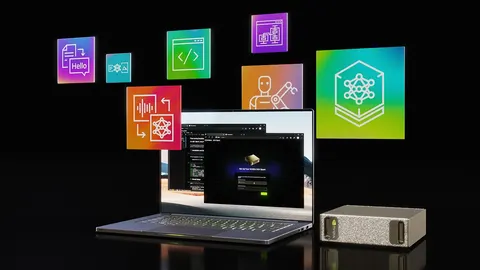
NVIDIA DGX Spark is easy to misunderstand. It is not a toy for ordinary users to run every chatbot locally, nor a shrunken data-center training cluster. What it really sells is 128GB unified memory, Grace Blackwell, the NVIDIA software stack, and a desktop form factor.
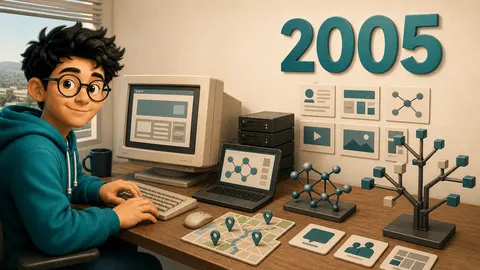
The tenth article in Thirty Years in IT and Me. In 2005, Web 2.0, YouTube, Google Maps, AJAX, Git, and open-source commercialization pushed software into the always-online era. Around those years, I also spent some time in Mountain View and saw the connection between the open-source world and Silicon Valley up close.

A practical guide to service-side event tracking: why it matters, what to collect at each traffic stage, how frontend, backend, gateway, and queue events differ, and how to choose between PostgreSQL, MongoDB, and ClickHouse.
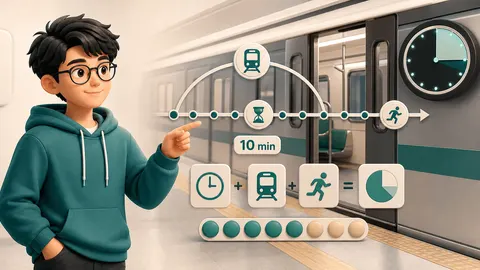
A small mathematical modeling case based on a subway timing problem: headway, dwell time, running speed, distance, repeated events, and where calculus enters if we model passenger distance explicitly.
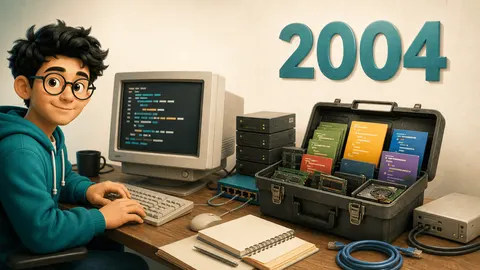
The ninth essay in Thirty Years in IT and Me. In 2004, Gmail, Firefox, Ubuntu, Facebook, Google's IPO, and MapReduce pushed the internet into a more complex stage. Inside a Linux company, Perl, PHP, Java, Shell, and early Python felt less like beliefs and more like tools within reach.
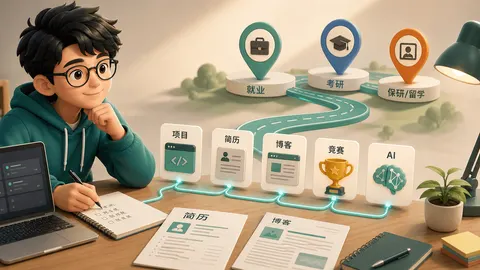
A practical career planning guide for students in computer science, software engineering, AI, data science, and related majors: how to build foundations, projects, writing habits, portfolios, AI-assisted workflows, and resumes from the first year.
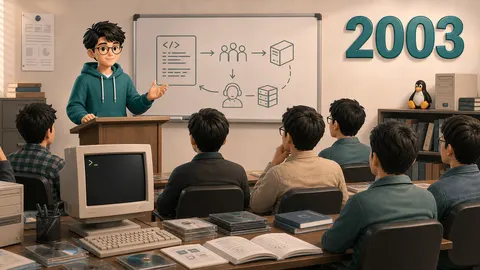
The eighth essay in Thirty Years in IT and Me. In 2003, SCO sued IBM, RHEL and Fedora took separate paths, and enterprise Linux kept moving forward. Free software and open source were no longer only ideals; they also had to face licenses, commercial support, and legal risk.
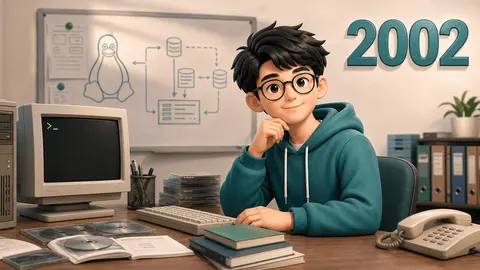
The seventh essay in Thirty Years in IT and Me. In 2002, Linux clearly moved from discs, forums, and idealism toward enterprise distributions, desktop experience, domestic software, and commercial support. My own experience was only one small angle inside that wave.
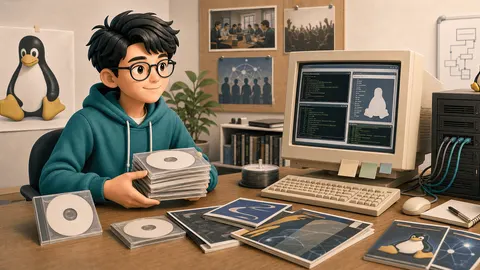
The sixth essay in Thirty Years in IT and Me. Around 2001, Linux was hot in China: distributions, technical magazines, communities, servers, and the imagination around domestic software intertwined. That line had actually been planted back in 1995, when I installed Slackware on a 386.

The fifth essay in Thirty Years in IT and Me. In 2000, I came to Beijing. CSDN could not offer the salary I expected, so I joined a foreign company instead. The internet bubble, portal fever, office stability, compensation rumors, and the network that remained together formed the air of that year.

Starting from Xiao Zi in the existing cover images, this essay breaks down how a stable blog character can be built through prompts, constraints, and iteration, then uses the same method to design Coda as a visual partner for ZiCode.
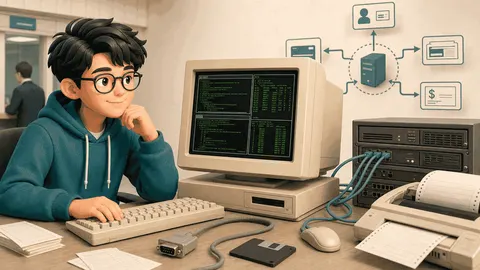
The fourth essay in Thirty Years in IT and Me. In 1999, I built bank front-end systems on SCO UNIX and truly wrote socket code into a production link. Software stopped being only forms and reports; it began to carry transactions, connections, timeouts, logs, and responsibility.
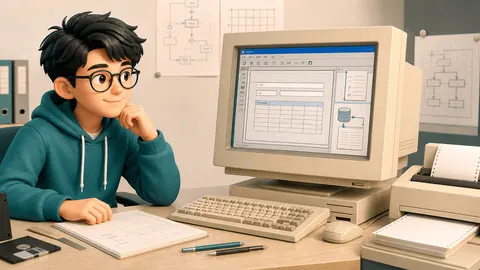
The third essay in Thirty Years in IT and Me. In 1998, I began doing MIS development. The butterfly in the browser was light; enterprise forms were heavy. Delphi, databases, reports, and office workflows made software truly enter organizational daily life.