
Quant Trading for Programmers 26: Abstract Notification Channels First
Article 26 adds a paper-trading notification-channel abstraction, stabilizing the send interface and receipt structure before connecting files, Lark, email, or other channels.
Page 6. Posts are ordered by date, with each page loading a bounded set of covers.
Article 26 adds a paper-trading notification-channel abstraction, stabilizing the send interface and receipt structure before connecting files, Lark, email, or other channels.

Article 25 adds paper-trading production checks for cash, market prices, target weights, daily reports, and review records, then reviews articles 21-25.

Article 24 saves and restores paper-trading account state with JSON files, persisting only cash and positions instead of derived snapshots so the daily flow can continue after restarts.

Article 23 links account snapshots, risk checks, rebalance plans, recommendation summaries, daily alert messages, and review records into one testable paper-trading daily cycle.

Article 22 adds paper-trading review records, saving daily equity, cash ratio, risk severity, and recommendation action as sortable entries with multi-day summaries.

Article 21 combines account snapshots, risk reports, and rebalance plans into HOLD, REBALANCE, and REDUCE_RISK actions so paper-trading output is easier to review and alert on.
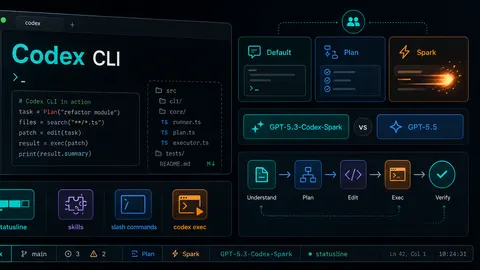
A practical Q&A about Codex collaboration modes, GPT-5.3-Codex-Spark, statusline configuration, skills, slash commands, codex exec, and the Codex SDK.

Article 20 combines account snapshots, risk reports, and rebalance plans into paper-trading daily report text, leaving a stable message format for Lark, email, or other notification channels.

Article 19 implements the first rebalance-plan layer, converting gaps between current and target weights into A-share board-lot buy and sell suggestions without modifying the account.

Article 18 implements paper-trading risk checks based on account snapshots, validating total exposure, cash buffer, and single-stock weight with readable violations.

Article 17 builds account snapshots on top of the paper-trading ledger, calculating cash ratio, position market value, floating PnL, and weights as unified input for risk controls and notifications.

Article 16 enters paper trading by adding accounts, positions, and execution results, making buy, sell, cash, and market-value updates testable ledger logic.

Article 15 implements a strategy promotion gate: candidates must satisfy minimum return, max drawdown, trade-count, and baseline-comparison requirements before entering paper-trading observation.
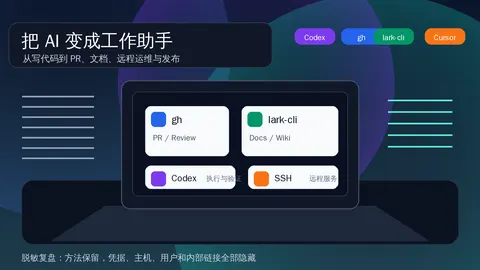
A sanitized field note on using Codex, Claude Code, Cursor, gh, and lark-cli for real engineering tasks: what work is worth delegating to AI, what boundaries must stay firm, and how to make AI-assisted work verifiable and shippable.

Article 14 implements strategy experiment records by saving parameter-search candidates, baseline results, metric deltas, status, and decisions into structured payloads for later review.

Article 13 implements parameter search by generating short-window, long-window, and position-ratio candidates, running one backtest per group, and ranking results with return, drawdown, and turnover penalties.

Article 12 adds reusable backtest metrics: total return, annualized return, annualized volatility, Sharpe-like ratio, max drawdown, win rate, profit-loss ratio, turnover, and trade count.

Article 11 extends the first single-symbol backtest into a multi-symbol portfolio backtest with equal-weight capital allocation, per-symbol runs, equity aggregation, and trade-count summaries.